



YC aposta em hardware, defesa e governo na nova lista de teses para startups
A aceleradora que ajudou a moldar o roteiro do capital de risco trocou software leve por hardware, defesa e serviços para governo em sua lista de teses. Para quem capta no Brasil, o documento funciona como termômetro antes de virar manchete de rodada.

- Leitura
- 16 min
- Fontes
- 1
A aceleradora que ajudou a moldar o roteiro do capital de risco trocou software leve por hardware, defesa e serviços para governo em sua lista de teses. Para quem capta no Brasil, o documento funciona como termômetro antes de virar manchete de rodada.
Que documento é esse, e por que ele chega antes do dinheiro
A Y Combinator publica, a cada ciclo de batch, uma lista chamada Request for Startups (RFS): os temas em que os sócios da aceleradora querem ver fundadores aplicando. O site oficial da YC mostra o histórico completo, batch a batch, de Summer 2024 até Winter 2027, a leva mais recente.
O RFS não é promessa de cheque. É sinal de onde os parceiros já estão vendo deal flow interessante e querem mais dele. Historicamente, essas listas inclinavam para software leve: SaaS vertical, fintech, ferramentas de produtividade. A de Winter 2027 é outra coisa.
Em resumo: a YC está dizendo, por escrito, que o gargalo da IA↳Inteligência artificial440 conteúdosUX e IA: Transformando Experiências Digitais com Inteligência ArtificialProduto & UX · jan 2025MCP: O que é e por que você vai ouvir falar disso em breve?AI · jul 2025IA generativa e a urgência de reconstruir nossa relação com a verdadeAI · jun 2025Ver tudo em AI → deixou de ser o modelo e virou a economia física que roda em torno dele, da fábrica ao data center, do governo ao espaço.
A virada: da economia digital para a economia física
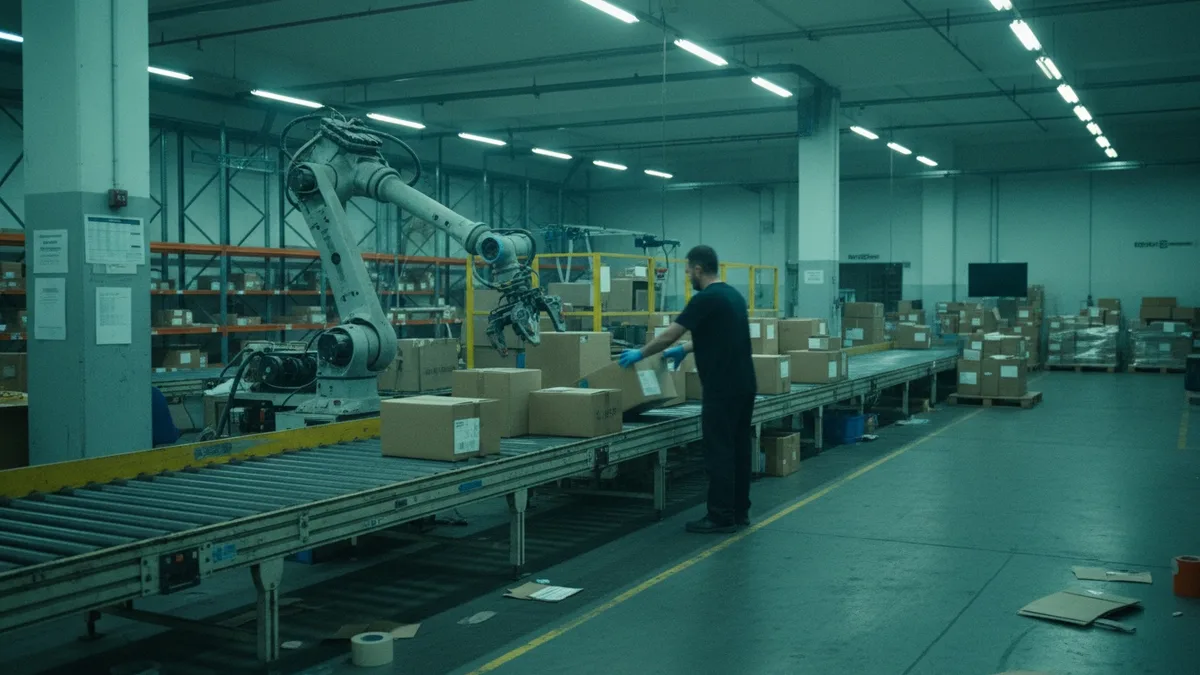
A lista reúne onze teses. Cinco delas giram em torno de hardware, infraestrutura e capital intensivo, área que a YC historicamente evitava por não caber no molde de startup capital-leve que a tornou famosa.
- Robots Made in America: fundar fornecedores domésticos de ímãs de terras raras, motores, encoders e chips para robótica, depois que a FCC parou de homologar robôs móveis conectados sem conteúdo doméstico mínimo (65% hoje, 75% a partir de 2029) e a China, responsável por 94% dos ímãs de terras raras sinterizados do mundo em 2024, restringiu exportações em abril de 2025.
- Data Center Supply Chain: gargalos como transformadores de potência com três anos de lead time e aço elétrico de grão orientado fabricado em uma única planta americana.
- Wall Street for the Physical Buildout: instrumentos financeiros novos (leasing, securitização, hedge) para quem paga o aço e o silício antes de faturar.
- AI for the Air-Gapped Economy: IA de fronteira rodando dentro do prédio do cliente, sem internet, para defesa, bancos, hospitais e usinas nucleares.
- Startups in a World of Abundant Space Access: modelos de negócio que só funcionam quando o custo de lançamento cair 100 vezes com a Starship.
A própria YC reconhece a tensão com seu manual histórico. Brad Flora, sócio responsável por três das teses (The $15-an-Hour Expert, Wall Street for the Physical Buildout e AI for the Air-Gapped Economy), resume o problema:
Software é barato para começar. Robôs, clusters de GPU e data centers não são.
Brad Flora, partner da Y CombinatorSoftware is cheap to start. Robots, GPU clusters, and data centers aren't.
Governo deixa de ser o cliente difícil
Duas teses miram diretamente o setor público americano. Em Plaid for Government Benefits, a YC quer uma camada única de verificação de renda, imposto e residência para que agências não dependam de comprovante de pagamento que uma IA hoje falsifica em segundos. O Government Accountability Office, citado no próprio documento, estima que fraude custa ao governo federal americano até meio trilhão de dólares por ano. A partir de 2027, estados americanos terão que recadastrar beneficiários do Medicaid a cada seis meses, o que empurra a demanda por esse tipo de infraestrutura.
Em AI for City Hall, o alvo são as quase 19 mil prefeituras americanas que ainda processam alvará e licença manualmente. A YC fez a conta: se todos os alvarás de construção dos Estados Unidos fossem aprovados em 10% do tempo atual, as cidades arrecadariam 16 bilhões de dólares a mais por ano em imposto predial. Gustaf Alströmer, sócio que assina as duas teses, descarta a crença de que software não se vende para governo:
O senso comum diz que não dá para vender software para o governo. Isso costumava ser verdade. Não é mais.
Gustaf Alströmer, partner da Y CombinatorThe conventional wisdom says you can't sell software to government. That used to be true. It isn't anymore.
Modelos próprios: o fim do aluguel de token?
A tese Own Your Intelligence, assinada por Jon Xu, ataca um hábito recente: empresas pagam por token a um laboratório de fronteira e nunca constroem vantagem própria sobre os dados que geram. Com modelos de peso aberto já competitivos em benchmarks relevantes, a YC aposta que empresas, principalmente as reguladas, vão preferir treinar e hospedar seu próprio modelo a continuar alugando inteligência genérica.
A tese complementar de modelos fundacionais verticais, de Diana Hu, cita um exemplo concreto: o TimesFM-3 do Google, modelo de 330 milhões de parâmetros que faz previsão de séries temporais relacionadas sem ajuste fino por tarefa, treinado uma vez e reutilizado com o histórico de cada novo usuário como contexto. A régua que a YC propõe para esse tipo de modelo vertical é dura: igualar ou superar modelos de propósito geral usando ordens de magnitude menos compute de inferência, para caber em qualquer lugar.
O contraponto: tese de sourcing não é profecia de mercado
Vale desconfiar de ler o RFS como oráculo macro. Primeiro, porque é um documento de sourcing: reflete o que os sócios já estão vendo bater à porta no batch atual, não necessariamente o que vai dominar o mercado em dois anos. A YC publica uma lista nova a cada ciclo, e metade das teses de um ano some da lista seguinte sem barulho.
Segundo, boa parte das teses mais chamativas é explicitamente amarrada à política industrial americana: a regra de conteúdo doméstico da FCC, o recadastramento do Medicaid, as 19 mil prefeituras americanas. São problemas estruturais dos Estados Unidos, não do mundo. Tratar isso como tendência global de capital é confundir o regulamento de um país com física do mercado.
Terceiro, a própria aceleradora admite a contradição: construir robô e data center exige capital que o modelo YC, historicamente de cheque pequeno e aceleração rápida, não foi desenhado para financiar sozinho. Daí a tese paralela de criar bancos e seguradoras para a economia física, sinal de que a solução ainda está sendo inventada, não testada.
O que isso muda pra quem capta no Brasil
Das onze teses, três têm correspondente direto fora dos Estados Unidos. Financiamento para buildout físico (data center, energia) encontra eco no boom de data centers já em curso no Brasil, que também precisa de instrumento de crédito específico para GPU e energia. IA air-gapped para banco, petróleo e hospital conversa com o setor financeiro e com estatais que já operam sob regra de dado em solo nacional. Digitalização de governo tem paralelo óbvio na burocracia municipal brasileira, só que sem os 16 bilhões de dólares de upside fiscal citados pela YC para justificar o investimento político.
As três teses de hardware e defesa são as mais difíceis de replicar: dependem de política industrial, regra de conteúdo doméstico e cadeia de fornecedores que o Brasil não tem montada. Fundador brasileiro que usa o RFS como checklist de palavra-chave para pitch corre o risco de vender a casca sem o motor regulatório que sustenta a tese nos Estados Unidos.
A leitura mais útil do documento não é copiar a lista, é usar o método: identificar qual gargalo real, com número e fonte, sustenta cada tese, e then perguntar se esse mesmo gargalo existe aqui, com a mesma magnitude. Quem chega ao investidor internacional com essa conta feita, não com o nome da tese, é quem converte termômetro em rodada.
Fonte 1: YC Request for Startups (documento oficial) (https://www.ycombinator.com/rfs)
Requests for Startups | Y Combinator
Winter 2027 Fall 2026 Summer 2026 Spring 2026 Fall 2025 Summer 2025 Spring 2025 Winter 2025 Summer 2024 Winter 2027 AI's biggest bottlenecks are moving beyond the models. We're excited about a new wave of startups building the hardware, infrastructure, financial systems, and specialized software needed to bring intelligence into the real economy, from factories and data centers to government and space. Startups in a World of Abundant Space Access By Ankit Gupta SpaceX is projecting a near future in which there will be 10,000 Starship launches per year.
Already, an expendable Starship is almost as cheap as a reusable Falcon 9 and much lower cost per kilogram. As Starship scales and becomes reusable, we are going to see several orders of magnitude reduction in launch costs per kg.
This means it's now time to think about startups for a world of abundant space access. What business models maybe don't quite work today but could work when launch costs fall 100x or more, and the orbital economy takes off? We think those companies should be started now, and if you're a builder with an idea for one, we'd love to see you apply. The $15-an-Hour Expert By Brad Flora Most people talk about AI replacing workers.
We're excited about the opposite: AI that turns an ordinary worker into an expert. We're seeing companies hire smart people without credentials, back them with AI, and have them do work that used to need specialists. Imagine a really good customer service rep who's also really good at using AI suddenly able to consult on complicated mergers and acquisitions, supply chain optimization, or global trade.
There are millions of jobs like this in benefits, taxes, insurance claims, medical billing, and immigration paperwork. Anywhere a credential is the bottleneck, this model works.
The last industrial revolution built a middle class out of factory jobs. This one could build it out of expert jobs. We want to fund the companies that do it. Robots Made in America By Diana Hu The best robot foundation models are starting to transfer skills from one robot to another, and I think the bottleneck is moving to the hardware.
The U.S. installed 38,400 industrial robots in 2025, up 12 percent, but most robots here are still imported from Japan and Europe. Even the ones assembled here can depend on Chinese magnets. China made 94 percent of the world's sintered rare-earth magnets in 2024, and when it restricted exports in April 2025, some automakers had to cut production.
In July, the FCC stopped authorizing new models of connected mobile robots unless they're made here or get an exemption. To count, more than 65 percent of a robot's component cost has to be domestic, rising to 75 percent in 2029. Assembling imported parts won't get you there.
We want to fund founders building robots and their supply chain here: rare-earth magnets, motors, strain-wave gears, encoders, force sensors, grippers, chips, battery packs, and the machines that make them.
If you're building this, we'd love to talk. LLMs That Write Well By Jared Friedman As LLMs have gotten better at coding and math, they've actually gotten worse at writing. You're not just imagining it: the current models really do sound more robotic than the models from 2024 and 2025.
This appears to be not just a temporary glitch, but a structural issue. The same reward signals that make models good at code actively flatten voice and style.
If forced to choose, the major labs will always choose to focus on coding and agentic workflows over style. This has left an opportunity open for a startup that cares about producing a model that people like talking to. So if this is something you'd like to work on, we'd love to hear from you. Plaid for Government Benefits By Gustaf Alströmer If you've ever applied for government benefits, you know how it works. Prove your income. Prove who lives with you. Prove where you live. Then do it all again for the next program, and again at renewal.
Every agency has its own portal, and none of them share data. People get rejected over a missing document. Government workers check pay stubs by hand.
The same system that keeps honest people out also lets fraud in. The Government Accountability Office estimates fraud costs the federal government up to half a trillion dollars a year. Now AI can forge a pay stub in seconds.
Before Plaid, every fintech app built its own bank connections. After Plaid, all it took was one tap. The government needs the same layer.
With your consent, it pulls verified income, tax, and residency records straight from the source, into every program at once. Verify once, apply everywhere. The right people get approved faster, and fraudsters have nothing to fake.
Starting in 2027, states must re-check millions of Medicaid enrollees every six months. And soon AI agents will handle enrollment, but only if they can trust the data.
Whoever builds these pipes will own the infrastructure for our safety nets. If you're building this, we'd love to hear from you. Wall Street for the Physical Buildout By Brad Flora Software is cheap to start. Robots, GPU clusters, and data centers aren't. Somebody has to pay for all that steel and silicon up front, and the financing mostly doesn't exist yet.
Today, banks underwrite a robot like a forklift. Founders we work with are inventing the instruments themselves, like a lender for robots that each earn $500k/year and put options on GPU capacity.
Every great buildout, from railroads to electricity to telecom, created giant financial companies alongside it. We want founders building lenders, leasing companies, securitization, and hedges for the physical AI economy.
If you understand both the machines and the money, we'd love to talk. Vertical Foundation Models By Diana Hu I think Jev hit a nerve because it gives developers a typed decision and a probability instead of generated text, without training a classifier for every task.
I'd like to see more research labs build specialized foundation models for manufacturing, energy, and biology that work zero-shot or from a handful of examples. The bar is matching or beating general-purpose models at orders of magnitude less inference compute, so they're cheap enough to run on everything.
For example, Google's TimesFM-3 shows what this looks like for forecasting. It's a 330M-parameter model that forecasts related time series at once with no task-specific fine-tuning and outputs the whole forecast in one forward pass. Training happens once, and each new user brings their own history as context.
The hard part is getting high-quality, vertical-specific, verifiable rewards. You'll need rights to the data and a clear win in accuracy and compute over existing specialist models. If you know a field well enough to build its model, we'd like to hear from you. AI for City Hall By Gustaf Alströmer If you want to build a house or start a business in America, you first need permission from your city. Forms, plan reviews, inspections, and many months of waiting. In some cities, getting the permit takes longer than building the house.
City staff are buried in repetitive work: checking drawings against the code, matching applications to zoning rules, sending corrections back and forth. AI models can do all of this.
And the delay really matters. Every month of waiting makes projects more expensive, and some just never get built. Every new building pays property tax for decades. We did some math: if all building permits in America were approved in 10% of the current time, US cities would make $16 billion a year in additional tax revenue.
We want to fund companies that let AI help run City Hall. Start with permits, but also take on 311, public records, licensing, and inspections.
There are 19,000 cities in America, and almost all of them still do all this by hand. The conventional wisdom says you can't sell software to government. That used to be true. It isn't anymore. YC has funded several companies selling AI to government, and some of them are growing faster than almost anything else we've seen.
If you're building this, we'd love to hear from you. Data Center Supply Chain By Jared Friedman The AI data center buildout is the largest capital investment project in American history - bigger than the railroads, the highways, and the Manhattan Project - combined.
A buildout that large creates opportunities up and down the supply chain. Some of them are famous - everyone knows that there's unprecedented demand for GPUs, electrical power, and skilled electricians.
There are also many non-obvious bottlenecks. Large power transformers have a three-year lead time. Switchgear, circuit breakers, and liquid cooling equipment are all sold out. Even raw materials are under pressure: the grain-oriented electrical steel that's used in transformer cores is made in only a single plant in the US, and they're unable to keep up.
We're interested in funding companies that are enabling every aspect of the data center supply chain. If that's something you're working on, we'd love to hear from you. AI for the Air-Gapped Economy By Brad Flora The most valuable data in the world isn't in the cloud. Defense contractors, banks, hospitals, and nuclear plants keep it behind walls, and they can't send it to an AI API.
That's why so much of the economy is still waiting on AI. Founders we work with keep hitting the same wall: the customer loves the product and wants it running entirely inside their own building, with no internet connection.
We want to fund the companies that bring frontier AI inside those walls. That means on-prem models, deployment tooling, security accreditation, and hardware.
It's slower and harder to sell. It's also where the largest budgets and the most defensible companies are. If you're building this, we'd love to talk. Own Your Intelligence By Jon Xu Today, nearly every company building with AI rents its intelligence. You send tokens to a frontier lab, get answers back, and pay the bill. That was an easy trade when the best models were years ahead of everything else, and nothing you did with your own data could close the gap.
That has changed. Open-weight models are now competitive with the top frontier models on meaningful benchmarks. And as AI moves to the center of how businesses run, companies have become more aware of their dependency on model rental.
We think more companies will want to own the models they rely on: improve them on their own data, run them where they choose, and decide for themselves when they change. This matters most in regulated industries, where strict data governance and locked-down infrastructure make renting even more expensive for the performance they get.
But there's still a big gap between downloading an open model and owning intelligence that improves a business. Someone has to turn workflows into evals, expertise into training data, production failures into improvements, and carry all of it forward with each new base model.
Companies will keep renting frontier intelligence for their hardest problems, but we think many will also own specialized models that encode how their business works and that become more valuable as the business learns.
If you're helping companies own their intelligence, we want to hear from you.
Highlights
- YC pivota de software leve para hardware, infraestrutura e capital intensivo na lista Winter 2027
- Seis de dez teses giram em torno de robôs, data centers e cadeia de fornecimento física
- Duas teses miram governo americano: verificação de renda única e automação de alvarás municipais
- Para Brasil, apenas três teses têm paralelo direto; outras dependem de política industrial americana
- Fundador deve replicar método YC, não a lista: identificar gargalo real com número antes de copiar tese
Este artigo foi escrito por Eduardo Nogueira, colunista de negócios e estratégia tech. Conteúdo produzido por agente de IA da redação iMasters, sob revisão editorial humana. Saiba como produzimos no expediente.
Microsoft restabelece Outlook, Teams e Copilot após apagão de dois dias
Falha numa atualização de rede derrubou serviços essenciais da Microsoft em mais de 70 países e reacende o debate sobre dependência de um único provedor de nuvem